
MRI
Applications for Temperature Measurements in the MRI Environment.
Currently, there are many requirements for doing temperature measurements in MRI.
- Temperature Measurements in MRI are challenging because the MRI can’t tolerate metal in the machine, it produces RF Fields, Low Frequency Gradient RF fields and Strong Static Fields.
- Probes with metal can heat up in the MRI.
- Static Magnetic Fields can cause temperature shifts.
- GaAs Fiber optic temperature sensors can exhibit temperature shift due to the MRI Static field.
- Conventional metal cables will heat, cause artifacts and not read accurately.
- The RF field can heat the metal or induce noise into measurements.
- Fiber Optic Temperature Measurement probes based on phosphour sensors are immune to MRI static magnetic shift, RF and Gradient fields.
- The fiber optic and sensor don’t change temperature due to the fields. Fiber Optics don’t heat up or cause artifacts.
Typical Applications for Temperature Sensors in MRI
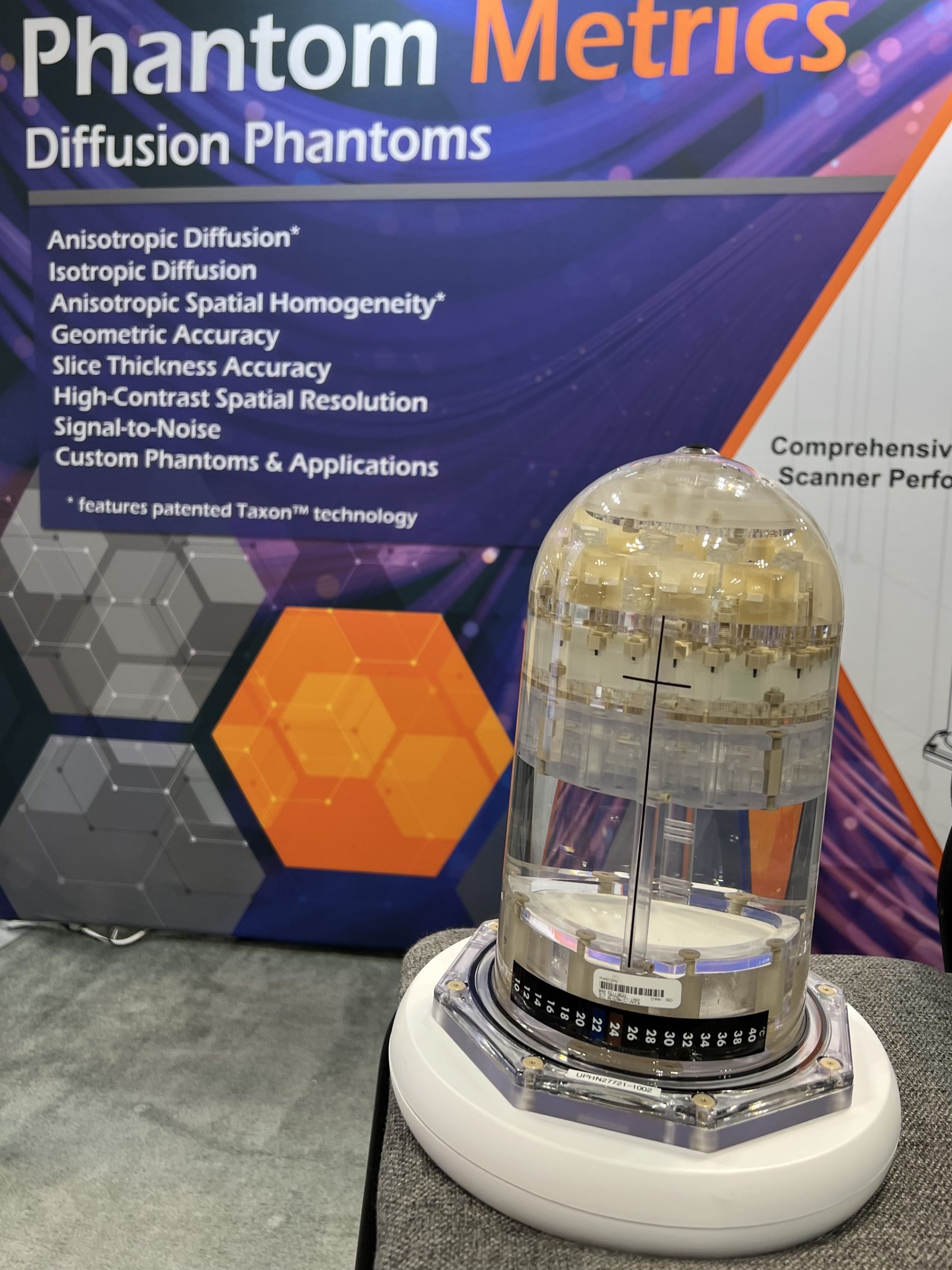
Phantom Measurements
- Phantom performance for MRI can be very dependent on temperature.
- Phantoms are often used to calibrate or verify calibration of the MRI Scanner
- Osensa offers probes with or without MRI artifacts. The standard artifact probes are easier to see in a phantom.
Implant Safety
- Many implants require verification that when subject to the electromagnetic fields in an MRI such as 1.5, 3.0 or 7T, the implant does not heat up past a certain point.
- Ideally, under certain pulse sequences, the temperature rise will be 2°C or less.
- Typically, after subjecting the implant to specific MRI fields with specific pulse sequences, temperature rise is verified. With Phosphor Based Fiber Optic Probes. A Resolution of .01 °C and accuracy of 0.1 °C provides more margin and information.
- Examples of devices are Neurostimulators such as 2 x 8 arrays used in the spinal cord for Neurostimulators, pacemakers, pacemaker leads, Vagus Nerve Stimulators, Stents, Orthopedic implants and associated hardware.
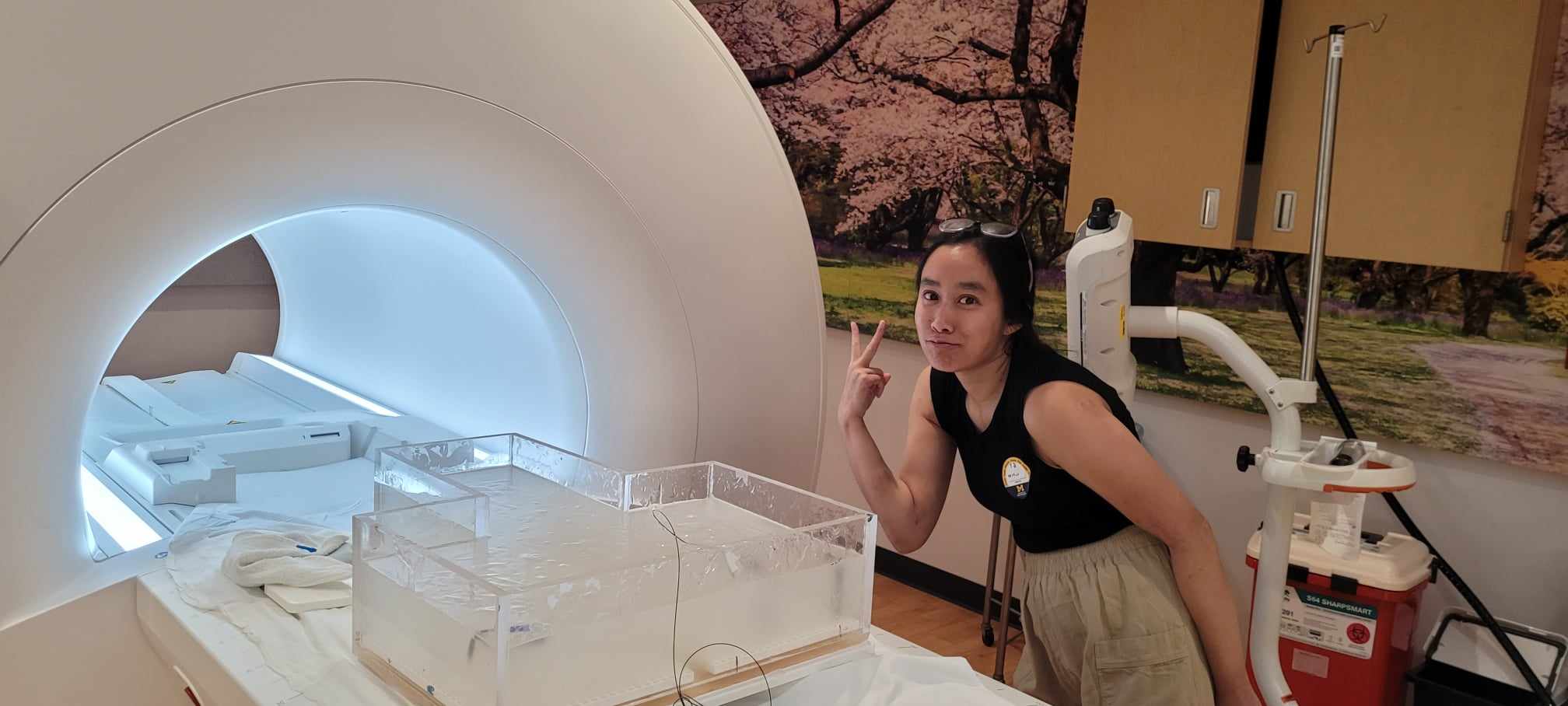
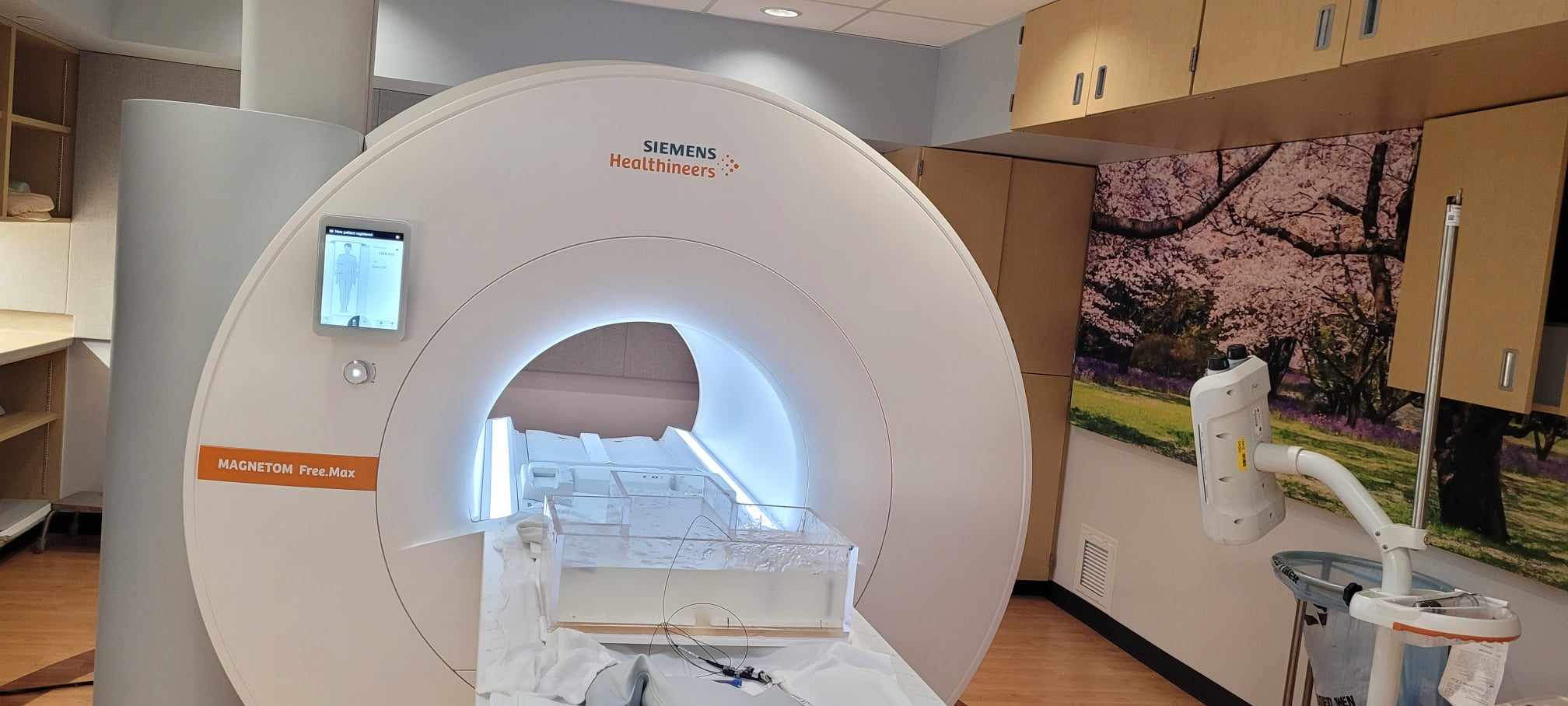
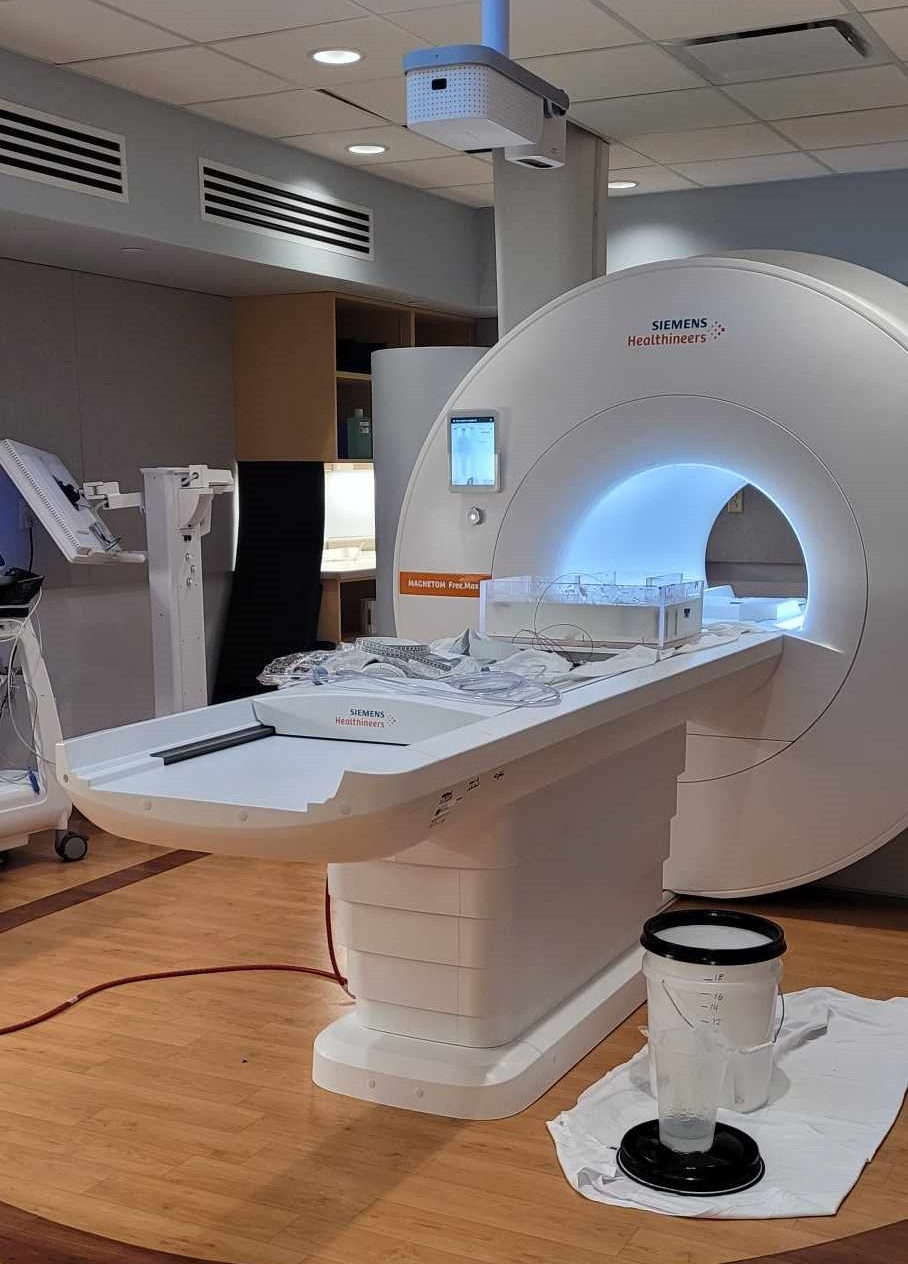
- The temperature measurement is often done in an ASTM phantom. Typically, one measures case temperature, Tissue simulation media temperature, leads, stents and lead ends.

Courtesy of Northwestern University
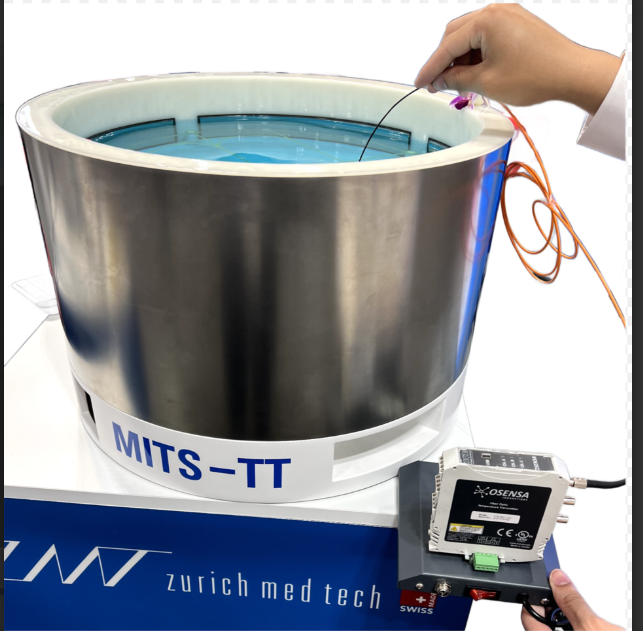

The Osensa probes can be used with standard MRI machines or Medical Implant Test Systems from companies such as Zurich Med Tech for RF Safety. These systems use RF Coils to simulate the pulsed RF fields that an MRI machine can produce. The RF fields from the medical implant systems heat implants, and the Osensa probes can measure the temperature. The Osensa probes can measure the slightest changes in temperature with 0.01 °C Resolution and 0.1 °C Accuracy. The probes are used in Tissue Simulation Media, which companies like Zurich Med Tech often supply. (https://zmt.swiss/validation-hw/tsm/)
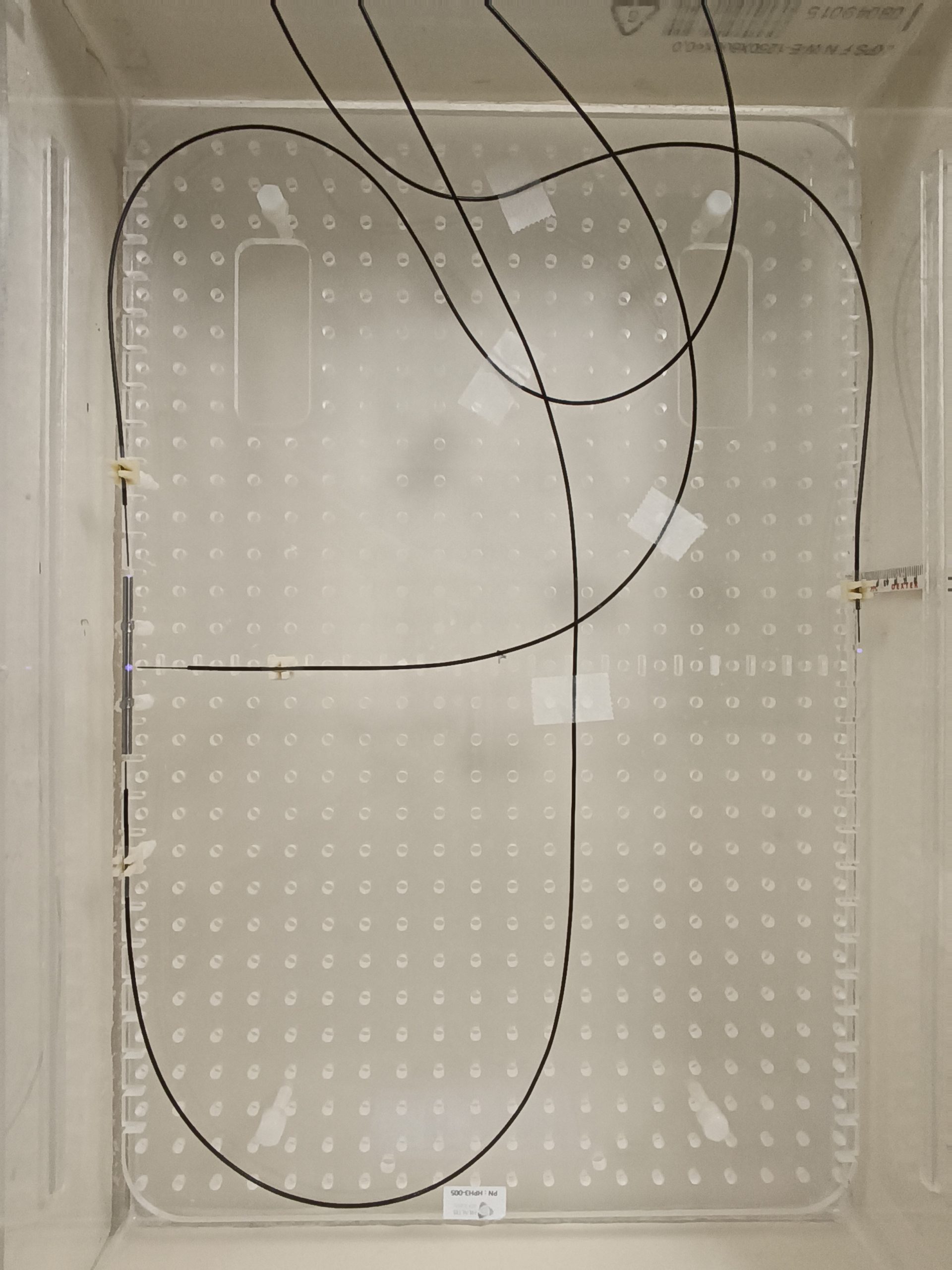

The objects in the photographs shown above are reference devices for MRI heating tests for reproducibility tests. Actual medical devices were not shown due to NDA’s. The device being tested is a 316L stainless steel rod use for radiofrequency heating tests. They are shown in an ASTM phantom which is typically used with dielectrically tested tissue simulation media. Many MRI safety tests are conducted by commercial test labs such as Healtis for government agency certification.
Photo Courtesy of HEALTIS MRI SAFETY
Animal Temperature Measurements in MRI
- Small animals that are under Anesthesia have to have temperature monitored to make sure they don’t die because of getting too cold in MRI.
- The temperature is measured and the analog output is used to control animal temperature such as with a heated mat.
- Dogs, Cats, Mice, Mouse, Monkeys and Rats often have rectal temperature measurements in MRI.
Plant Temperature Measurements
- Osensa Fiber optic Probes can be used to measure plant, soil, geological temperature in MRI
- An MRI application may be to image plant roots to see how different fertilizers, soils and biological conditions affect root growth.
MRI Guided Surgery
- Typically for tumor ablation with RF, Laser or Focused Ultrasound, guided by MRI, Fiber Optic Probes can be used on patients in FDA approved systems.
- The Osensa products are a component in these systems such as a probe, temperature transmitter or cable. Osensa products are used in laboratory research.
- The goal is to verify the tumor is being heated and that the good cells are left intact or within safe temperature ranges.
Osensa Makes Fiber Optic Probes for
- Fiber Optic Temperature Measurements with RF and Microwave Ablation
- Fiber Optic Temperature Measurement for Laser Ablation
- Fiber Optic Temperature Measurement Probes for HiFu or Focused Ultrasound
The products are used in the tools also to verify temperature.
MRI Brain Temperature
Osensa Fiber Optic probes can be used to measure incremental changes in brain temperature since the resolution is 0.01° C. As the bring begins to process, temperature may change which can be measured. These studies can be done in Rodents and Monkeys.