- 7 Brookside Terrace North Caldwell, NJ 07006

Laser Ablation

Laser Ablation
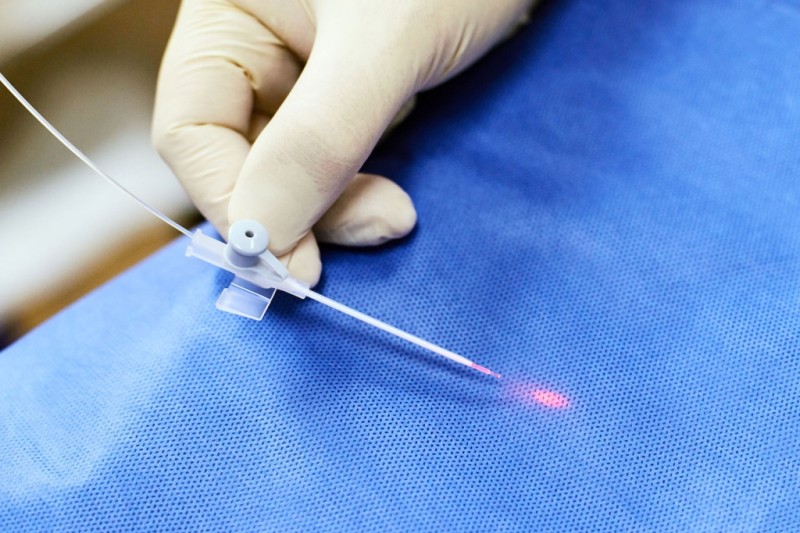
Laser Ablation is used to treat solid tumors. Laser Ablation is used as an alternative to traditional resectional surgery in some cases for tumor reduction. The primary use for which we have sold probes has been in R&D applications for surgical tools used in brain surgery; it is also used for gastrointestinal tumors, the Liver and Pancreas, and prostate cancer. The idea of laser ablation is to transport the laser light to the tissues over fiber optics for thermal treatments of the tumor. The laser energy will be either scattered, reflected, or absorbed. The light absorbed by tissue is converted into thermal energy, or heat. The absorption and heat rate will depend on the beam irrigation pattern, wavelength, pulsed conditions, time and power level. The absorption characteristics of different tissue types rely on the laser wavelength. Different wavelengths have different penetration depths. Tissue exposure temperatures ranging from 45 °C to 55 °C or higher than 60 °C cause irreversible cell damage or necrosis. Typically, a manufacturer of the a medical laser system designs the entire system and simulates it.
The Osensa Fiber Optic Probes can be used for Medical Device development to characterize a system and also to monitor the laser. When characterizing a laser probe, the characterization is also dependent on the beam pattern and type of tissue. The Osensa fiber optic probes can also be used in MRI-guided applications, as they are MRI-safe. New applications also involve temperature testing of laser nanoparticle applications.
The Osensa Product offering requires a laser version of the FTX-300, along with specified components, to function properly. The current systems works for lasers with a wavelength of 950 and above.